Showing posts with label Classic Review. Show all posts

Wednesday, April 4, 2018

Review: The Curious Incident Of The Dog In The Night-Time by Mark Haddon


The Curious Incident Of The Dog In The Night-Time by Mark Haddon


Pages: 226
Genre: Literary/Contemporary
Publisher: Vintage
Publication Date: July 2003

Christopher John Francis Boone knows all the countries of the world and their capitals and every prime number up to 7,057. He relates well to animals but has no understanding of human emotions. He cannot stand to be touched. And he detests the color yellow. 

Although gifted with a superbly logical brain, for fifteen-year-old Christopher everyday interactions and admonishments have little meaning. He lives on patterns, rules, and a diagram kept in his pocket. Then one day, a neighbor's dog, Wellington, is killed and his carefully constructed universe is threatened. Christopher sets out to solve the murder in the style of his favorite (logical) detective, Sherlock Holmes. What follows makes for a novel that is funny, poignant and fascinating in its portrayal of a person whose curse and blessing are a mind that perceives the world entirely literally.
I agree with Christopher—this book’s brilliant narrator—about three things:

1. Dogs are important.
2. Blue Planet is one of the best TV shows.
3. Anybody who touches me deserves to be punched.


Monday, December 18, 2017

Review: The Haunting Of Hill House – Shirley Jackson


The Haunting Of Hill House – Shirley Jackson


First published in 1959, Shirley Jackson's The Haunting of Hill House has been hailed as a perfect work of unnerving terror. It is the story of four seekers who arrive at a notoriously unfriendly pile called Hill House: Dr. Montague, an occult scholar looking for solid evidence of a "haunting"; Theodora, his lighthearted assistant; Eleanor, a friendless, fragile young woman well acquainted with poltergeists; and Luke, the future heir of Hill House. At first, their stay seems destined to be merely a spooky encounter with inexplicable phenomena. But Hill House is gathering its powers—and soon it will choose one of them to make its own.


Review: I fell in love with Shirley Jackson’s short stories when I was in college, but her novels seem to get mixed reviews. A lot of people love her short fiction and feel “meh” about her longer work. I stumbled across a copy of The Haunting of Hill House at the used bookstore and decided to give it a try.

I guess I fall into the “meh” category. I like parts of this book, but it’s not as creepy as I hoped.

The story follows four people who come to a mansion called Hill House to investigate the paranormal activity that allegedly occurs there. The main character is Eleanor, a young woman who has spent most of her adult life caring for her dying mother and dealing with her overbearing sister. She thinks her trip to Hill House will give her a chance to become independent. At first, the ghost hunt is just a fun adventure with her new friends. Then things start to go wrong. The ghosts at Hill House refuse to let Eleanor leave.


“All I could think of when I got a look at the place from the outside was what fun it would be to stand out there and watch it burn down.” – The Haunting of Hill House


This book is a character-driven horror story. There are ghosts, but most of the tension comes from the relationships between the characters. Eleanor is very childlike, and the other characters treat her like a kid. This pisses her off because she just got away from her awful sister, who also treats her like a kid. She’s still figuring out what she wants to do with her life. She’s not as “adult” as other people her age, but she’s trying (mostly).

The house makes the conflicts worse by turning the characters against each other. Possessions are mysteriously destroyed, forcing the characters to share clothes and bedrooms. Strange writing appears on the walls, making the ghost hunters question if one of them is playing a prank. On the surface, everybody appears to get along, but there’s a simmering tension that runs through the relationships. The reader gets the sense that the characters could start hating each other at any moment.

The descriptions of the house are extremely well written. It’s easy to imagine this huge, creepy mansion with weird doors and staircases everywhere. It’s like a fictional version of the Winchester Mystery House in California.


“Within, walls continued upright, bricks met neatly, floors were firm, and doors were sensibly shut; silence lay steadily against the wood and stone of Hill House, and whatever walked there, walked alone.” – The Haunting of Hill House


My problem with this novel is that there’s entirely too much talking. Most of the time, the characters aren’t even saying anything important. They’re just yapping at each other. It massively got on my nerves. I wanted them to stop talking about ghost hunting and actually go ghost hunting. You’re in a haunted mansion! Put down the alcohol, shut your traps, and do something interesting! I don’t have the patience for this.

My attention wandered often while reading this novel, but I like the ending. It makes the reader question if Eleanor is a reliable narrator. Is the house messing with her mind? Is she going insane? Has she always been insane? As the story progresses, Eleanor’s worst fears come true, and she starts identifying with the house more than with the people inside it. Is that the house’s fault, or Eleanor’s?


“No live organism can continue for long to exist sanely under conditions of absolute reality; even larks and katydids are supposed, by some, to dream.” – The Haunting of Hill House


I was kind of disappointed with this book. I expected it to be creepier. I liked it enough that I’ll try some of Shirley Jackson’s other novels, but so far, I prefer her short stories.


Wednesday, November 8, 2017

Review: Adam Of The Road – Elizabeth Janet Gray


Adam Of The Road – Elizabeth Janet Gray


"A road's a kind of holy thing," said Roger the Minstrel to his son, Adam. "That's why it's a good work to keep a road in repair, like giving alms to the poor or tending the sick. It's open to the sun and wind and rain. It brings all kinds of people and all parts of England together. And it's home to a minstrel, even though he may happen to be sleeping in a castle." And Adam, though only eleven, was to remember his father's words when his beloved dog, Nick, was stolen and Roger had disappeared, and he found himself traveling alone along these same great roads, searching the fairs and market towns for his father and his dog.


Review: The plot of this book would be a kid’s dream. The main character gets to wander around England and have adventures every day. That would’ve been my ideal life as a kid. (Well, maybe not the part where I’m cold, exhausted, and hungry. I was a wimpy kid. Still, NO SCHOOL!)

Adam, his father, and their dog are minstrels in thirteenth-century England. They earn a living by traveling around the country, entertaining people with songs and tricks. One night while Adam is sleeping, another minstrel steals the dog. While Adam chases the thief, he gets separated from his father. What follows is a long, crazy adventure full of danger and new friends.

First, I’m very impressed that the author was able to take British history and package it in a way that makes it appealing to kids. I was usually bored out of my mind in history class, but with this book, you don’t even realize you’re learning. The author just casually drops history into an adventure story. Kids get to learn about life in the thirteenth century in a tolerable, bite-sized way. It’s brilliant!

I also like the values that the story teaches. Again, the author blends these seamlessly into Adam’s adventure, so the reader never feels like they’re getting bashed over the head with a moral. Adam meets a lot of people while he searches for his dog and his father. He learns that being kind will get you farther than lying and stealing.

Adam is a fun character. He’s a bit arrogant, but he’s very self-reliant for an eleven-year-old. No matter what happens on his journey, he’ll find a way to get through it. He also knows himself well. He’s determined to become a famous minstrel like his father. Becoming a good minstrel takes years of practice and memorization, but Adam isn’t afraid to work for what he wants.

I think I would’ve loved this book as a kid. It contains dogs, traveling, and children who have minimal parental supervision. That’s everything child-me would’ve wanted in a book.

But, since I’m an adult, I found Adam of the Road a little tedious. To an adult reader, it’s obvious that everything in the story will work out in the end. Adam will reunite with his father and his dog. The plot is very episodic. Adam walks to a town, something goes wrong, he walks to a different town, something goes wrong. Repeat for 300 pages. (There’s a lot of walking in this story.) I was ready for the book to be over long before I got to the end.

I also wondered why Adam calls his father “Roger” instead of “Dad.” Was that ever explained? Is there a historical reason for it?

This book might not have enough tension to keep an adult entertained, but I recommend it to any kid who likes history or adventure stories. 


Wednesday, October 11, 2017

Review: My Cousin Rachel – Daphne du Maurier


My Cousin Rachel – Daphne du Maurier


Orphaned at an early age, Philip Ashley is raised by his benevolent older cousin, Ambrose. Resolutely single, Ambrose delights in Philip as his heir, a man who will love his grand home as much as he does himself. But the cozy world the two construct is shattered when Ambrose sets off on a trip to Florence. There he falls in love and marries—and there he dies suddenly. 
Jealous of his marriage, racked by suspicion at the hints in Ambrose's letters, and grief-stricken by his death, Philip prepares to meet his cousin's widow with hatred in his heart. Despite himself, Philip is drawn to this beautiful, sophisticated, mysterious Rachel like a moth to the flame. And yet . . . might she have had a hand in Ambrose's death?


Review: Daphne du Maurier is brilliant at writing introverted characters. I relate to them so hard. Well, I can relate to everything except the cousin-on-cousin lovin’. That’s . . . not socially acceptable in modern times.


“Ambrose used to say to me in Florence that it was worth the tedium of visitors to experience the pleasure of their going. He was so right.” – My Cousin Rachel


Phillip and his older cousin, Ambrose, are lifelong bachelors. They’re happy with their quiet, private existence in their English mansion. One winter, Ambrose decides to leave the cold of England and visit Italy. There, he meets another cousin, Rachel, and marries her. Phillip is confused. Why would his loner cousin suddenly decide to get married? Soon after the marriage, Ambrose dies, and Rachel comes to visit Phillip in England. Phillip believes that Rachel murdered Ambrose, but he has no proof. As he reluctantly gets to know Rachel, he slowly starts falling in love with her. Is Rachel a nice girl with a tragic past, or is she manipulating Phillip to get his money?


“We were dreamers, both of us, unpractical, reserved, full of great theories never put to test, and like all dreamers, asleep to the waking world. Disliking our fellow men, we craved affection; but shyness kept impulse dormant until the heart was touched. When that happened the heavens opened, and we felt, the pair of us, that we have the whole wealth of the universe to give. We would have both survived, had we been other men.” – My Cousin Rachel


This is one of those books that don’t have much of a plot, but have memorable characters and a lot of atmosphere. The tension builds slowly. The reader is kept guessing about Rachel’s true motives and is always on the lookout for clues about what she is planning. Did she murder Ambrose? Is she trying to con Phillip out of his inheritance? Is Phillip sick because Rachel is somehow poisoning him? Rachel is a funny, charismatic person, so I was inclined to like her, but I was always looking for proof that she’s secretly evil.

To make things more interesting, Phillip isn’t a reliable narrator. At first, he hates Rachel and refuses to see anything good about her. Later, he becomes obsessed with her. He doesn’t want her to leave the mansion or meet other people. He always refers to her as “my” Rachel, like she’s his property. He even convinces himself that she’s in love with him. Phillip is so willing to overlook her flaws that she could commit murder, and he’d just blindly go along with it.


“Here is Tom Jenkyns, honest and dull, except when he drank too much. It's true that his wife was a scold, but that was no excuse to kill her. If we killed women for their tongues all men would be murderers.” – My Cousin Rachel


This is my second Daphne du Maurier book. I read Rebecca earlier this year. I liked My Cousin Rachel more than Rebecca. I think the plot is stronger in Rebecca, but the writing is stronger in My Cousin Rachel. The writing quirks that annoyed me in Rebecca aren’t present in this book.

Since the pacing of My Cousin Rachel is so slow, I expected a big reveal and a big payoff at the end. I didn’t get it. Some parts of the ending are predictable, and the book ends so quickly that it doesn’t give the reader much closure. I still have so many questions! Not enough was resolved for me. That’s my only complaint, though. I really enjoyed this story and the characters’ screwed-up relationship.

I have a few issues with the ending of My Cousin Rachel, but I’ll happily read more of Daphne du Maurier’s work (when it turns up at the used bookstore). I’m especially eager to read her short stories. Also, I think My Cousin Rachel is a movie now? I need to see it. Since so much of the story takes place inside Phillip’s head, it’ll be interesting to see how they handle that in film form. 


Wednesday, September 20, 2017

Review: Treasure Island – Robert Louis Stevenson


Treasure Island – Robert Louis Stevenson


A voyage for buried treasure spells trouble for cabin boy Jim Hawkins, who finds himself in the middle of a mutiny with some of the nastiest pirates to ever sail the seven seas.


Review: When I was a young, classics-obsessed bookworm, I read Robert Louis Stevenson’s The Strange Case of Dr. Jekyll and Mr. Hyde. I expected it to be creepy. Instead, it was boring. Very, very disappointingly boring.

After that less-than-thrilling reading experience, I was hesitant to try more Stevenson books. Then someone offered me a copy of Treasure Island for free. You can’t pass up free classics, right? I took the book, put it on my shelf for six months, and then finally got around to reading it.

And . . . it was very, very disappointingly boring. Seriously, the most interesting part of the book is the annotations left by the kid who owned my copy before it was given to me. Judging by the kid’s margin-scribbles, she was deeply unimpressed by the story and by the essay questions her teacher assigned. Her pirate doodles are pretty adorable, though.

Anyway, on to the story. The novel is narrated by Jim Hawkins, a teenager who finds a treasure map that once belonged to a pirate who died at his parents’ inn. Jim and a few other people acquire a ship and a crew to take them to Treasure Island. They want to dig up the treasure. Unfortunately for them, their pirate crew mutinies. Chaos and death ensue. It’s up to Jim to save his friends without losing his treasure. Treasure Island was first published as a serial in a YA magazine during the 1880s.


“Fifteen men on the dead man's chest, yo-ho-ho, and a bottle of rum!
Drink and the devil had done for the rest, yo-ho-ho, and a bottle of rum!” – Treasure Island


Compared to most classics, the plot of Treasure Island moves very fast. There’s a lot of action and danger. The book is short (about 150 pages), so it’s a fairly quick read.

If the book had been longer, I wouldn’t have finished it. This might be a case of “It’s not you, book, it’s me.” I’ve never had much luck with novels set on boats. Probably because I don’t care about boats and don’t have a huge desire to learn about them. There are so many ship-related words in this story that I often had trouble picturing the action scenes. I just didn’t know what the author was talking about, and constantly putting the book down to Google boat images is distracting. This is totally my fault, not the book’s. If you’re an expert in 1700s-era ships, you might love the setting.

I had a hard time following the pirates’ dialogue. I always got the gist of what they were saying, so I was never confused for very long, but holy crap, pirates ramble on and on. Get to the point already!


“The captain has said too much or he has said too little, and I'm bound to say that I require an explanation of his words.” – Treasure Island


This story was originally written for children, so the plot is simple, but it’s too simple for my liking. It’s obvious that the pirates are going to mutiny. I knew that Jim would save his friends. It’s obvious who has the treasure. I questioned why I was reading the book at all.

Treasure Island wasn’t for me, but I’m glad I read it because it’s part of western culture. This story has influenced many of the modern adventure novels I read and loved as a kid. I’m grateful for that. It’s also helpful to know the origins of “Long John Silver.” It’s more than just a restaurant where you can buy mediocre fish and chips. #TheMoreYouKnow


“It was Silver's voice, and before I had heard a dozen words, I would not have shown myself for all the world. I lay there, trembling and listening, in the extreme of fear and curiosity, for, in those dozen words, I understood that the lives of all the honest men aboard depended on me alone.” – Treasure Island


Monday, September 18, 2017

Review: Rebecca – Daphne du Maurier


Rebecca – Daphne du Maurier


"Last night I dreamt I went to Manderley again." 
So the second Mrs. Maxim de Winter remembered the chilling events that led her down the turning drive past the beeches, white and naked, to the isolated gray stone mansion on the windswept Cornish coast. With a husband she barely knew, the young bride arrived at this immense estate, only to be inexorably drawn into the life of the first Mrs. de Winter, the beautiful Rebecca, dead but never forgotten . . . her suite of rooms never touched, her clothes ready to be worn, her servant—the sinister Mrs. Danvers—still loyal. And as an eerie presentiment of evil tightened around her heart, the second Mrs. de Winter began her search for the real fate of Rebecca . . . for the secrets of Manderley.


Review: I first saw this book on a list of classic horror novels and thought the synopsis sounded epic. A young bride who barely knows her husband? An old mansion? A creepy servant? A mysterious death? I needed this book in my life. I promptly tracked down a cheap copy and ordered it.

When the book arrived, I was not prepared for what I found. The cover was Valentine-red, and some ugly-ass all-caps font proclaimed it THE UNSURPASSED MODERN MASTERPIECE OF ROMANTIC SUSPENSE.

Romantic suspense?

Yuck.


Luckily for me, this book is light on the romance and heavy on the suspense. Maybe it was considered romantic when it was first published back in the 1930s, but by today’s standards, it’s not romantic at all. Maxim de Winter and the unnamed narrator have only known each other for a few weeks when they make the spontaneous decision to get married. The narrator moves to Maxim’s house, a mansion called Manderley. She becomes the second Mrs. de Winter. The first—Rebecca de Winter—died mysteriously in a sailing accident. The staff at Manderley is still reeling from her death. Rebecca was loved by everybody. As the narrator settles into her new life, she inadvertently uncovers Rebecca’s secrets while desperately trying to preserve her own identity.


“‘Either you go to America with Mrs. Van Hopper or you come home to Manderley with me.’
‘Do you mean you want a secretary or something?’
‘No, I'm asking you to marry me, you little fool.’” - Rebecca


Daphne du Maurier has a thorough understanding of introverts. I actually laughed out loud a few times because the narrator doesn’t always play well with others. She stands in the middle of fancy parties and pretends to have fun while secretly hating every second of it. She sneaks down back staircases to avoid interacting with Manderley’s staff. She even climbs out a window because she’s just come home from a trip and is too exhausted to put up with Maxim’s irritating sister. I can relate. Sometimes, you just want to be left alone. That’s hard when you’re the owner of a mansion-turned-tourist-attraction, and when you’ve taken the place of the ultra-extroverted Rebecca.

My favorite part of the story is how the other characters subtly push the narrator into the space that Rebecca left behind. They expect her to keep the same daily routine that Rebecca had. They make her answer her mail at Rebecca’s desk and serve her all the same foods that Rebecca liked. All of Rebecca’s friends want to meet the new Mrs. de Winter. It’s creepy. Instead of feeling like the owner of a home, the narrator feels like a guest in Rebecca’s home. Rebecca is gone, but she’s far from forgotten.


“‘Men are simpler than you imagine my sweet child. But what goes on in the twisted, tortuous minds of women would baffle anyone.’” - Rebecca


Reading this book was a strange experience for me. When I wasn’t reading it, I was thinking about it. I wanted to know what really happened to Rebecca, and why the creepy Mrs. Danvers was so obsessed with her. I even cared about the narrator’s marriage. I wanted to know if she’d stay with Maxim or if she’d leave because he wasn’t over Rebecca. The story is suspenseful and gave me a lot to think about when I wasn’t reading it, but when I was reading it, I often got bored. There are tense moments, but they’re separated by long stretches where nothing happens. The slowness frustrated me.

I’m also not the biggest fan of the writing style. I’m a reader who loves description and always wants more of it, but the description feels clumsy in this novel. For example, the narrator and Maxim would be walking to the beach, and then there’d be a half-page block of text that lists every plant that grows in the area. I was tempted to skim those.

I didn’t love Rebecca as much as I thought I would, but there are some things I admire about it. The novel shows how we can build up a stranger in our minds until they become unrealistically perfect. This is a story about jealousy, insecurity, secrecy, and how our perceptions of others can be disastrously inaccurate.


“I wondered how many people there were in the world who suffered, and continued to suffer, because they could not break out from their own web of shyness and reserve, and in their blindness and folly built up a great distorted wall in front of them that hid the truth.” - Rebecca


I have My Cousin Rachel sitting on my TBR shelf, so I’m looking forward to seeing what else Daphne du Maurier has written. 


Wednesday, June 7, 2017

Review: Fairy Tales From The Brothers Grimm – Jacob Grimm & Wilhelm Grimm


Fairy Tales From The Brothers Grimm – Jacob Grimm & Wilhelm Grimm


This is a beautiful treasury of some of the most famous stories of the Brothers Grimm, reproduced in their original form. Among many others, the stories include: “The Travelling Musicians,” “The Golden Bird,” “Tom Thumb,” “Snow-Drop,” “The Frog-Prince,” and “Ashputtel.”


Review: I was familiar with the modern adaptations of these classic fairytales, but I’d never read the originals in all their gory glory. I loved the majority of these stories. They’re weird and morally ambiguous. A lot of them end with “They all lived happily ever after, until they died.” The Brothers Grimm are like the 1800s version of Internet trolls. “You like these characters? Well, they’re all dead or miserable now. LOL. U mad?”

Fairytales are interesting because you get to see the values of the societies that created them. Many of the tales in this collection have similar themes. The stories teach kindness, hard work, patience, charity, and quick thinking. They do their teaching in disturbing ways, though. Bad guys tend to suffer horrific deaths.

I assume that most people are familiar with the fairytales in this collection (such as “The Frog-Prince,” “Rumpelstiltskin,” “Snow White,” and “Ashputtel”/Cinderella), so I won’t bother summarizing them. Disney already did that for me. Instead, I’ll tell you what I learned from The Brothers Grimm.

  • Selling your children is almost always a bad idea. Murdering your children also tends to create more problems than it solves.
  • Being a beautiful princess sucks. Your parents devise a bunch of crazy tests for your suiters and then force you to marry whichever suiter doesn’t die. You get no say in this murder/marriage process.
  • Be nice to frogs.
  • Don’t trust crows, but be sure to eavesdrop on their conversations. Ditto ravens.
  • It’s great to be the youngest child. Your older siblings are selfish and stupid, so you just have to wait for them to get themselves killed. Then you’ll get all the inheritance. And maybe one of those beautiful princesses.
  • Avoid ugly old women. They’re all witches. Or cannibalistic witches.
  • Men can’t always tell the difference between beautiful princesses and cannibalistic witches.
  • For the love of God, remember to invite all the fairies to your birthday party. If you don’t, there will be hell to pay.


 “He who helped you when you were in trouble ought not afterwards be despised by you.” - Fairy Tales From The Brothers Grimm

“He who is too well off is always longing for something new.” - Fairy Tales From The Brothers Grimm


My favorite stories are “The Fisherman and His Wife” and “The Mouse, The Bird and The Sausage.” In “The Fisherman and His Wife,” a man finds a magic fish, and his wife takes advantage of the fish’s kindness. In “The Mouse, The Bird and The Sausage,” one of the main characters is a sausage. A sausage who likes to cook. What’s not to love about that?

If you haven’t read these stories, I’d recommend them. They’re short and entertaining. They may also deepen your understanding of modern literature. It’s amazing how often authors allude to fairytales.


Wednesday, November 30, 2016

Review: The Power Of Myth – Joseph Campbell & Bill Moyers


The Power Of Myth – Joseph Campbell & Bill Moyers


Campbell's most impressive gift was his ability to take a contemporary situation, such as the murder and funeral of President John F. Kennedy, and help us understand its impact in the context of ancient mythology. Herein lies the power of The Power of Myth, showing how humans are apt to create and live out the themes of mythology. Based on a six-part PBS TV series hosted by Bill Moyers, this classic is especially compelling because of its engaging question-and-answer format, creating an easy, conversational approach to complicated and esoteric topics.


Review: I’ve lost track of how many people have recommended this book to me over the years. I was told that it would change my life. It would alter the way I looked at the world. It would completely transform the way I think about literature. After all that hype, I had massive expectations for this book.

Did it meet my (probably unrealistic) expectations? No. Will I read more of Joseph Campbell’s work in the future? Yes.

The Power of Myth is written as an interview between Bill Moyers and Joseph Campbell. They discuss mythology and whether or not it’s still relevant in modern times. This book covers a lot of ground. They talk about everything from ancient civilizations, to love, to Star Wars. Since this is a philosophy book, it’s fairly dense. It took me about two weeks to read it, and I still felt like parts of it went over my head. This is the type of book that you have to read several times to really “get” it.

A “myth” is a story that helps form the basis of a culture. The main goal of a myth is to teach people how to behave in their society. Joseph Campbell claims that myths are still relevant in today’s world. Here are the main points of his argument:

1. Cultures around the world have very similar myths. Motifs of creation, death, resurrection, and heroism crop up over and over in different stories. This suggests that there are some universal human values.

2. Mythology can teach us about the history of the world because myths evolve as different cultures interact.

“Whether you call someone a hero or a monster is all relative to where the focus of your consciousness may be.” – The Power of Myth

3. Technology has forced us to go from isolated tribes to a global society. The old myths don’t work for us anymore, so we have to come up with new ones that apply to everybody.

“Computers are like Old Testament gods; lots of rules and no mercy.” – The Power of Myth
 
“We need myths that will identify the individual not with his local group but with the planet.” – The Power of Myth

4. Modern American society lacks myths. For example, there is no widespread ritual that marks the transition from childhood to adulthood. This can lead to young people inventing their own rituals, such as gang initiation. In ancient societies, there were transition rituals for different stages of life.

“Society has provided [children] no rituals by which they become members of the tribe, of the community. All children need to be twice born, to learn to function rationally in the present world, leaving childhood behind.” – The Power of Myth

5. Even though myths are old, they still have things to teach us. Myths are about the adventure of being alive. Campbell urges people to “follow their bliss.” Do what feels right and makes you happy.

“People say that what we’re all seeking is a meaning for life. I don’t think that’s what we’re really seeking. I think that what we’re seeking is an experience of being alive, so that our life experiences on the purely physical plane will have resonances with our own innermost being and reality, so that we actually feel the rapture of being alive.” – The Power of Myth

This book didn’t change my life, but Joseph Campbell is a good storyteller. My favorite parts are when he tells different myths from around the world. There are a lot of similarities and common themes between them. I didn’t like the analysis of the myths as much as the myths themselves. Some of Campbell’s opinions are too mystical and hippie-ish for me. I’m not a spiritual person. Parts of the book made me feel like a cynic. Following your bliss is great, but it’s not always practical in the real world.

“We're so engaged in doing things to achieve purposes of outer value that we forget the inner value, the rapture that is associated with being alive, is what it is all about.” – The Power of Myth  

I didn’t love this book, but the myths interested me enough that I’m looking forward to reading The Hero with a Thousand Faces.


Wednesday, October 26, 2016

Review: Fight Club – Chuck Palahniuk


Fight Club – Chuck Palahniuk


Chuck Palahniuk's darkly funny first novel tells the story of a god-forsaken young man who discovers that his rage at living in a world filled with failure and lies cannot be pacified by an empty consumer culture. Relief for him and his disenfranchised peers comes in the form of secret after-hours boxing matches held in the basements of bars. Fight Club is the brain child of Tyler Durden, who thinks he has found a way for himself and his friends to live beyond their confining and stultifying lives. But in Tyler's world there are no rules, no limits, no brakes.


Review: I’ve said before that I have a love/hate relationship with Chuck Palahniuk’s books. I hate a lot of them, but I keep reading them because I never know what I’m going to get when I open one. I like surprises.

Unfortunately, Fight Club wasn’t a good surprise for me.

The story is about an unnamed narrator who copes with his severe insomnia by attending support groups for people with deadly diseases. When it’s discovered that he doesn’t have a deadly disease, he forms Fight Club with his friend, Tyler, as a new way to cope with his problems. Fight Club starts as an underground boxing club, but soon the members start plotting to destroy civilization.

Even though it’s politically incorrect to say it, this is a total “boy book.” Most of the characters are frustrated, aggressive men. They’re stuck in jobs they hate. They have personal problems they’re struggling to solve without help. They’re mad at the modern world’s consumerist society. To deal with all of their rage, they form clubs and beat each other bloody. The fistfights quickly evolve into pranks, bomb-making, and property destruction. The men want to leave their mark on the world, even if it’s a bad mark. (As a side note, who knew that so many household objects could be used to create explosives?)

“I see in the fight club the strongest and smartest men who've ever lived. I see all this potential and I see squandering. God damn it, an entire generation pumping gas, waiting tables, slaves with white collars. Advertising has us chasing cars and clothes, working jobs we hate so we can buy shit we don't need. We're the middle children of history, man, no purpose or place, we have no Great war, no Great depression, our great war is a spiritual war, our great depression is our lives. We've all been raised by television to believe that one day we'd all be millionaires and movie gods and rock stars, but we won't and we're slowly learning that fact. And we're very, very pissed off.” – Fight Club

I think Fight Club is a modern classic because the themes are relatable. In modern capitalist societies, people often feel lonely and powerless. In Fight Club, the characters band together to take control of their lives. Becoming your own boss and abandoning society’s laws are appealing ideas, but the characters in this story basically become terrorists. They try to take control by destroying what already exists.

“The things you own end up owning you. It's only after you lose everything that you're free to do anything.” – Fight Club

This book gives the reader a lot to think about, but I had a hard time getting past the writing style. Actually, I completely loathed the writing style. It’s a minimalist, stream-of-consciousness style that quickly got on my nerves. I know the author was trying to show the narrator’s mental instability, but it didn’t work for me. Sometimes I felt like the author was just trying to show how clever he is. I found it pretentious and distracting. I was so busy thinking about the writing that I never got invested in the plot or characters. This is one of those books that I had to force myself to read.

There are a bunch of other things I’d like to discuss, but they’re all spoilers, so I’m going to shut up. Now I need to watch the movie. I think I’ll like the story a lot more if I’m not trapped in the narrator’s head.


Wednesday, October 5, 2016

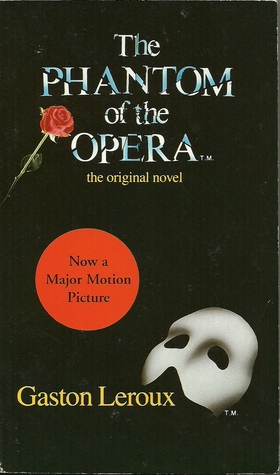
Review: The Phantom Of The Opera – Gaston Leroux


The Phantom Of The Opera – Gaston Leroux


First published in French as a serial in 1909, The Phantom of the Opera is a riveting story that revolves around the young, Swedish Christine Daaé. Her father, a famous musician, dies, and she is raised in the Paris Opera House with his dying promise of a protective angel of music to guide her. After a time at the opera house, she begins hearing a voice, who eventually teaches her how to sing beautifully. All goes well until Christine's childhood friend Raoul comes to visit his parents, who are patrons of the opera, and he sees Christine when she begins successfully singing on the stage. The voice, who is the deformed, murderous 'ghost' of the opera house named Erik, however, grows violent in his terrible jealousy, until Christine suddenly disappears. The phantom is in love, but it can only spell disaster.


Review: This review is for the English translation of a French book.

I knew the plot of this book before I started it, but I’ve never seen any of the Phantom movies, plays, or musicals. This book was my first real introduction to the story. I expected to like it, but I ended up struggling to finish it.

The Phantom of the Opera is about a “phantom” who takes the opera very seriously. If you value your life, don’t get between the Phantom and his opera. The Phantom develops an obsession with a singer, Christine Daaé, and will do anything to further her singing career. Eventually, he becomes so obsessed with her that he abducts her. Raoul, Christine’s lover, ventures into the bowels of the opera house to rescue her.

Even though I had a hard time finishing this book, there are a few elements of it that kept me from giving up. First, the Phantom is a complex villain. He’s a talented singer, and he just wants to have a normal life, but he can’t because of his facial deformity. I never liked him—he’s a deranged criminal—but I felt sorry for him. His childhood completely sucked. His mother forced him to wear a mask because she didn’t want to look at his deformity. That can’t be good for a kid’s self-esteem.

“If I am the phantom, it is because man's hatred has made me so.” – The Phantom of the Opera 
“He had a heart that could have held the entire empire of the world; and, in the end, he had to content himself with a cellar.” – The Phantom of the Opera

The setting of this story is strange and vividly described. The Palais Garnier is a real place, and I spent way too much time looking at photos of it on Google. It’s beautiful. I want to go to Paris and see it. The author does a great job of making the setting come to life.

I have a hard time with books that contain a lot of characters because I get them confused in my mind. This book has approximately one billion unnecessary side characters. Most of them are introduced very quickly in the first few chapters. It took a lot of concentration to remember who was who. I kept flipping back through the pages to remind myself. By the end, I could remember the important ones, but it was difficult at first.

I was trying to think of a kind way to say this, but I can’t, so I’ll just say it: The characters are all idiots. Christine and Raoul especially got on my nerves. They both make really terrible choices all the time. At one point, Raoul and the Persian are trapped in the Phantom’s torture room. The Persian is trying to find a way to escape, and Raoul lies on the floor and says, “Tell me when you find a way out.” Um, dude, you’re in the room, too. Why don’t you help find a way out instead of just derping around on the floor?

My biggest issue with the book is the melodrama. I know this is a classic, and writing styles change over time, but it’s impossible for me to take melodrama seriously. The Phantom of the Opera is stuffed with exclamation marks, dramatic declarations of love, weeping, and flailing. It’s all just way too much for me. I was laughing and rolling my eyes instead of immersing myself in the story.

“I tore off my mask so as not to lose one of her tears . . . and she did not run away! . . . and she did not die! . . . She remained alive, weeping over me, weeping with me. We cried together! I have tasted all the happiness the world can offer.” – The Phantom of the Opera

I’m glad I finally read this book because I’ve wanted to read it for years. Parts of the story are entertaining, but overall I’m not a huge fan.


Wednesday, September 7, 2016

Review: Geek Love – Katherine Dunn


Geek Love – Katherine Dunn


Geek Love is the story of the Binewskis, a carny family who set out—with the help of amphetamine, arsenic, and radioisotopes—to breed their own exhibit of human oddities. There’s Arturo the Aquaboy, who has flippers for limbs and a megalomaniac ambition worthy of Genghis Khan . . . Iphy and Elly, the lissome Siamese twins . . . albino hunchback Oly, and the outwardly normal Chick, whose mysterious gifts make him the family’s most precious–and dangerous–asset.

As the Binewskis take their act across the backwaters of the U.S., inspiring fanatical devotion and murderous revulsion; as its members conduct their own Machiavellian version of sibling rivalry, Geek Love throws its sulfurous light on our notions of the freakish and the normal, the beautiful and the ugly, the holy and the obscene. Family values will never be the same.


Review: I’ve written and deleted this review so many times because this book has stumped me. I liked it, but I can’t say I enjoyed reading it, and that’s a very hard thing to explain.

Geek Love is about sibling rivalry. The Binewski family uses drugs to give birth to deformed children for their freak show. As the children grow up, they start competing against each other, wanting more and more attention from the crowds who come to see their deformities. Eventually, the siblings resort to mutilation and murder to get rid of the competition.

This is one of those books that will make you uncomfortable. Nothing is off-limits. Since the story is about bodies, there is a lot of discussion of body parts, functions, and fluids. There’s even a scene where the younger brother scrapes mold off the older brother’s balls. He does it with magic—which I guess is more sanitary than doing it with your fingers—but still, yuck. If you’re squeamish, you should probably avoid this novel.

The characters are extremely well-developed and extremely unlikeable. Crowds come to the family’s carnival to see “freaks,” but the true freakishness of these characters is on the inside. They put money and fame before anything else and will do whatever it takes to get attention, including abandoning babies who aren’t deformed enough to draw crowds. There’s no limit to the characters’ depravity, which makes them interesting to read about.

My favorite character is Chick. He’s the youngest child and the only one who doesn’t have a competitive personality. He’s really sweet. I was hoping his storyline would have a happy ending, but the other people in this book are way too messed up to let that happen. Chick’s magic becomes a weapon in his siblings’ quest to destroy each other.

The characters are well-developed, and the writing is brilliant (with lots of gory details), but I still had a lot of trouble getting through Geek Love. It was very easy for me to put the book down and not pick it back up. This is one of those novels that have amazing characters and an interesting world but not much action. I spent the first few hundred pages waiting for the plot to start. When there is action, it often happens so quickly that it’s slightly confusing. The pace of the story was always too slow or too fast for me. I was either confused or bogged down in details.

When I finished the book, I still had a lot of questions, especially about Arturo the Aquaboy. Arturo is able to convince thousands of people to cut off their limbs so they look like him and are no longer “ordinary,” but what’s so appealing about Arturo? Are people just envious of the attention he gets? Why would anyone want to be like him? He’s a horrible person with no redeeming qualities. The book’s narrator, Oly, is his willing slave and spends most of her time with him, so I feel like I should have seen something good about Arturo that would make people listen to him. And, if thousands of people are cutting off their limbs, then won’t limbless people become “ordinary”? I don’t know, but I definitely wouldn’t cut off my limbs for Arturo. (Or for anybody else. Probably.)

“There are those whose own vulgar normality is so apparent and stultifying that they strive to escape it. They affect flamboyant behavior and claim originality according to the fashionable eccentricities of their time. They claim brains or talent or indifference to mores in desperate attempts to deny their own mediocrity. These are frequently artists and performers, adventurers and wide-life devotees. 
Then there are those who feel their own strangeness and are terrified by it. They struggle toward normalcy. They suffer to exactly that degree that they are unable to appear normal to others, or to convince themselves that their aberration does not exist. These are true freaks, who appear, almost always, conventional and dull.” – Geek Love 

Reading Geek Love made me think about how much ability people should have to change their bodies. In my culture, tattoos, piercings, and plastic surgery are normal, but where’s the line? Should people be allowed to cut off their limbs? Stick pins in their skin? Inject chemicals into their bloodstreams that change how fetuses grow? Also, who gets to make up the rules for body modification? In the book, a man shoots at Oly and her siblings because he doesn’t think deformed children should be alive, but the children love being “freaks.” Who gets to decide which types of body modification are okay and which aren’t?

I can see why this book is considered a modern classic. It’s thought-provoking and deeply unsettling. However, I struggled to finish it because of the pacing and the lack of plot.