
 |
| This post contains affiliate links. I earn a commission from qualifying purchases. |
I regret to inform you that the title of this post may be a lie. "Funny" and "Distressing" are both highly subjective. These books may not be funny or distressing to you.
I guess a better post title would be "Authors Who Use A Light Tone To Write About Serious Subjects," but nobody would click on that. It has too many words.
These books are about gloomy things, but they won't make you feel too gloomy. I thought they were funny!
Funny Books About Distressing Subjects
Look Me In The Eye: My Life With Asperger's by John Elder Robison
Memoir

Ever since he was young, John Robison longed to connect with other people, but by the time he was a teenager, his odd habits—an inclination to blurt out non sequiturs, avoid eye contact, dismantle radios, and dig five-foot holes (and stick his younger brother, Augusten Burroughs, in them)—had earned him the label “social deviant.” It was not until he was forty that he was diagnosed with a form of autism called Asperger’s syndrome. That understanding transformed the way he saw himself and the world.
Why I recommend it: The author was a highly intelligent child with neglectful parents and undiagnosed autism. The first half of the book is about the havoc he caused as a child and teen. He dug giant holes, started fires, and tricked the local police and fire department into thinking that a human sacrifice was happening. It's very funny, but it's also sad because his parents just didn't care. They had too many of their own problems.
When the author realized he didn't "fit" anywhere in society, he dropped out of high school and made a place for himself in the world. His resilience and sense of humor are impressive.
Support Independent Bookstores
RANGER CONFIDENTIAL: LIVING, WORKING, AND DYING IN THE NATIONAL PARKS BY ANDREA LANKFORD
Memoir

For twelve years, Andrea Lankford lived in the biggest, most impressive national parks in the world, working a job she loved. She chaperoned baby sea turtles on their journey to sea. She pursued bad guys on her galloping patrol horse. She jumped into rescue helicopters bound for the heart of the Grand Canyon. She won arguments with bears. She slept with a few too many rattlesnakes.
Hell yeah, it was the best job in the world! Fortunately, Andrea survived it.
In this graphic and yet surprisingly funny account of her and others’ extraordinary careers, Lankford unveils a world in which park rangers struggle to maintain their idealism in the face of death, disillusionment, and the loss of a comrade killed while holding that thin green line between protecting the park from the people, the people from the park, and the people from each other. Ranger Confidential is the story behind the scenery of the nation’s crown jewels—Yosemite, Grand Canyon, Yellowstone, Great Smokies, Denali. In these iconic landscapes, where nature and humanity constantly collide, scenery can be as cruel as it is redemptive.
Why I recommend it: Since I work at a state park, I thought reading this book would be stressful. It was! I picked it up and put it down so many times. It's a book full of worst-case scenarios. I mean, this quote is in the introduction:
"In the United States, a park ranger is more likely to be assaulted in the line of duty than is any other federal officer."
Fun times. Let's quickly move on.
Andrea Lankford spent twelve years as a ranger in various national parks. This book includes all the behind-the-scenes stuff that park visitors don't see. The author writes about the accidents and deaths, the brutal work schedule, and the crappy living conditions for the staff. Her writing style is surprisingly funny. She has the gallows humor that seems to be common among park employees.
If you want to work in parks, I highly recommend this book. It'll give you a realistic view of all the bad things that happen. But, the job isn't all bad. You get to see bizarre and beautiful things that (often) make the pain worth it.
Support Independent Bookstores
STIFF: THE CURIOUS LIVES OF HUMAN CADAVERS BY MARY ROACH
Science Nonfiction

Mary Roach takes the age-old question, "What happens to us after we die?" quite literally. And in Stiff, she explores the "lives" of human cadavers from the time of the ancient Egyptians all the way up to current campaigns for human composting. Along the way, she recounts with morbidly infectious glee how dead bodies are used for research ranging from car safety and plastic surgery (you'll cancel your next collagen injection after reading this!), to the authenticity of the Shroud of Turin.
Impossible (and irreverent) as it may sound, Roach has written a book about corpses that's both lively and fresh. She traveled around the globe to conduct her forensic investigations, and her findings are wryly intelligent. While the myriad uses for cadavers recounted are often graphic, Roach imbues her subject with a sense of dignity, choosing to emphasize the oddly noble purposes corpses serve, from organ donation to lifesaving medical research.
Readers will come away convinced of the enormous debt that we, the living, owe to the study of the remains of the dead. And while it may not offer the answer to the ancient mystery we were hoping for, Stiff offers a strange sort of comfort in the knowledge that, in a sense, death isn't necessarily the end.
Why I recommend it: It's a modern classic for a reason. I love Mary Roach's nonfiction because she asks the morbid questions that normal people are afraid to ask. This book is about what happens to bodies that are donated to science. It's fast-paced, funny, interesting, and never disrespectful to the corpses. I couldn't put it down.
Support Independent Bookstores
CURSED OBJECTS: STRANGE BUT TRUE STORIES OF THE WORLD'S MOST INFAMOUS ITEMS BY J.W. OCKER
History Nonfiction
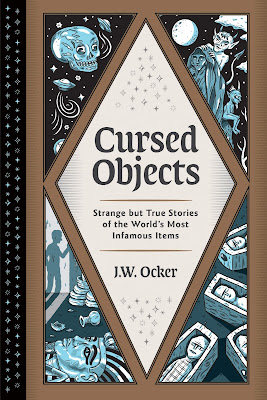
They're lurking in museums, graveyards, and private homes around the world. Their stories have inspired countless horror movies, reality TV shows, campfire tales, books, and even chain emails. They're cursed objects, and in order to unleash a wave of misfortune, all they need . . . is you. As a culture, we can't seem to get enough of cursed objects. But never before have the true stories of these infamous real-life items been compiled into a fascinating and chilling volume.
Why I recommend it: The book delivers exactly what the title promises. The author travels to museums and to the depths of the Internet to find "cursed" objects that are linked to death, destruction, or misfortune. The history of each object is told in 2-4 pages, which makes the book a quick read. The writing style is upbeat, and the objects are fascinating. It's obvious that the author is passionate about cursed objects and had a lot of fun researching their history. The curse stories are ridiculous and easily disproven by historical research, but they're fun in a spooky way.
Support Independent Bookstores
QUACKERY: A BRIEF HISTORY OF THE WORST WAYS TO CURE EVERYTHING BY LYDIA KANG & NATE PEDERSEN
History Nonfiction

Discover 67 shocking-but-true medical misfires that run the gamut from bizarre to deadly. Like when doctors prescribed morphine for crying infants. When snorting skull moss was a cure for a bloody nose. When consuming mail-order tapeworms was a latter-day fad diet. Or when snake oil salesmen peddled strychnine (used in rat poison) as an aphrodisiac in the '60s. Seamlessly combining macabre humor with hard science and compelling storytelling, Quackery is a visually rich and information-packed exploration of history's most outlandish cures, experiments, and scams.
Why I recommend it: If you’re looking for something educational, gross, and hilarious, this is the book for you. The history of medicine is a gruesome topic, but the authors make it bearable with their lively writing style. This is definitely not a dry academic text. I laughed while reading it. The hardcover edition is surprisingly beautiful with glossy pages and colorful graphics. It would make an excellent gift for a strange person.
Support Independent Bookstores
Born A Crime: Stories From A South African Childhood by Trevor Noah
Memoir

A collection of eighteen personal stories, Born a Crime tells the story of a mischievous young boy growing into a restless young man as he struggles to find his place in a world where he was never supposed to exist. Born a Crime is equally the story of that young man's fearless, rebellious and fervently religious mother—a woman determined to save her son from the cycle of poverty, violence and abuse that ultimately threatens her own life.
This book is both accessible and insightful. I learned about South Africa in school, but a memoir made it real for me. You feel like you’re there with the author while he’s being thrown out of a moving car or (accidentally) burning down a white family’s home. While you’re reading about the author’s personal experiences, you’re also learning about South Africa’s history, culture, and flawed legal system. It’s a compelling book.
Even if you’ve never seen Trevor Noah’s comedy shows, you should read this book. I promise you’ll be entertained while you're learning.
Get Well Soon: History's Worst Plagues And The Heroes Who Fought Them by Jennifer Wright
History Nonfiction

In 1518, in a small town in Alsace, Frau Troffea began dancing and didn’t stop. She danced until she was carried away six days later, and soon thirty-four more villagers joined her. Then more. In a month more than 400 people had been stricken by the mysterious dancing plague. In late-seventeenth-century England an eccentric gentleman founded the No Nose Club in his gracious townhome―a social club for those who had lost their noses, and other body parts, to the plague of syphilis for which there was then no cure. And in turn-of-the-century New York, an Irish cook caused two lethal outbreaks of typhoid fever, a case that transformed her into the notorious Typhoid Mary.
Throughout time, humans have been terrified and fascinated by the diseases history and circumstance have dropped on them. Some of their responses to those outbreaks are almost too strange to believe in hindsight. Get Well Soon delivers the gruesome, morbid details of some of the worst plagues we’ve suffered as a species, as well as stories of the heroic figures who selflessly fought to ease the suffering of their fellow man.
Why I recommend it: This book has a chapter about each of Earth’s deadliest plagues. The subject has the potential to be depressing, but it’s not! The author’s writing style is funny and upbeat. I could happily sit and read huge chunks of the book at once. It’s quickly paced and not dry at all. The author’s sense of humor made it an easy read. The humor is juvenile, which I appreciate. I’m not the most mature person.
I like that the book doesn’t only focus on death and disfigurement. After each plague, humanity learned more about diseases, the human body, and how we can prevent future plagues. The author talks about what modern humans can learn from historical diseases.Smoke Gets In Your Eyes & Other Lessons From The Crematory by Caitlin Doughty
Memoir

Most people want to avoid thinking about death, but Caitlin Doughty—a twenty-something with a degree in medieval history and a flair for the macabre—took a job at a crematory, turning morbid curiosity into her life’s work. Thrown into a profession of gallows humor and vivid characters (both living and very dead), Caitlin learned to navigate the secretive culture of those who care for the deceased.
Smoke Gets in Your Eyes tells an unusual coming-of-age story full of bizarre encounters and unforgettable scenes. Caring for dead bodies of every color, shape, and affliction, Caitlin soon becomes an intrepid explorer in the world of the dead. She describes how she swept ashes from the machines (and sometimes onto her clothes) and reveals the strange history of cremation and undertaking, marveling at bizarre and wonderful funeral practices from different cultures.
Her eye-opening, candid, and often hilarious story is like going on a journey with your bravest friend to the cemetery at midnight. She demystifies death, leading us behind the black curtain of her unique profession. And she answers questions you didn’t know you had: Can you catch a disease from a corpse? How many dead bodies can you fit in a Dodge van? What exactly does a flaming skull look like?
Why I recommend it: The author graduated from college with a degree in medieval history, and the only job she could get was “beer wench” at a medieval-themed restaurant. She decides to work at a crematory instead. This book is a collection of darkly humorous anecdotes, observations, death-related history, and insider information about how the funeral industry operates.
You’d expect a book about death to be depressing, but this one isn’t. I actually laughed out loud a few times because the author has a wonderful sense of humor. Her coworkers are funny, too. I guess you need to laugh a lot if you’re going to burn bodies for a living.
The book isn’t all funny, though. Working with bodies and grieving families has an impact on the author’s mental health. I love that she’s honest about the difficult parts of her job. It would’ve been easy to make this book humorous and nothing else.
I read the majority of the book in one sitting. It’s an engaging, informative memoir.
Furiously Happy: A Funny Book About Horrible Things by Jenny Lawson
Memoir

In Furiously Happy, a humor memoir tinged with just enough tragedy and pathos to make it worthwhile, Jenny Lawson examines her own experience with severe depression and a host of other conditions, and explains how it has led her to live life to the fullest.
Why I recommend it: This book definitely delivers the laughs that the title promises. Jenny Lawson suffers from several illnesses, and each chapter talks about the problems they cause in her life. Some of the chapters are deep and honest, but most of them are just hilarious.
I know what you're thinking: Being sick isn't funny, and you’re horrible for laughing at sick people. Usually, I’d agree, but if you live every day with a disease that can’t be cured, sometimes laughing is all you can do.
Support Independent Bookstores
Cannibalism: A Perfectly Natural History by Bill Schutt
Science Nonfiction

For centuries scientists have written off cannibalism as a bizarre phenomenon with little biological significance. Its presence in nature was dismissed as a desperate response to starvation or other life-threatening circumstances, and few spent time studying it. A taboo subject in our culture, the behavior was portrayed mostly through horror movies or tabloids sensationalizing the crimes of real-life flesh-eaters. But the true nature of cannibalism—the role it plays in evolution as well as human history—is even more intriguing (and more normal) than the misconceptions we've come to accept as fact.
In Cannibalism: A Perfectly Natural History, zoologist Bill Schutt sets the record straight, debunking common myths and investigating our new understanding of cannibalism's role in biology, anthropology, and history in the most fascinating account yet written on this complex topic. Schutt takes readers from Arizona's Chiricahua Mountains, where he wades through ponds full of tadpoles devouring their siblings, to the Sierra Nevadas, where he joins researchers who are shedding new light on what happened to the Donner Party—the most infamous episode of cannibalism in American history. He even meets with an expert on the preparation and consumption of human placenta (and, yes, it goes well with Chianti).
Bringing together the latest cutting-edge science, Schutt answers questions such as why some amphibians consume their mother's skin; why certain insects bite the heads off their partners after sex; why, up until the end of the twentieth century, Europeans regularly ate human body parts as medical curatives; and how cannibalism might be linked to the extinction of the Neanderthals. He takes us into the future as well, investigating whether, as climate change causes famine, disease, and overcrowding, we may see more outbreaks of cannibalism in many more species—including our own.
Why I recommend it: This book gave me nightmares about dying from mad cow disease. Nightmares probably don’t sound like a good thing, but if I’m thinking about a book in my sleep, it must be doing something right. Mad cow disease is especially terrifying because the British government tried to suppress info about it to protect the beef industry. Yeah . . . we’re all screwed.
The writing style is funnier than I expected. My favorite chapters are the ones about Christopher Columbus. I knew about the damage he did to the places he “explored,” but I didn’t know his connection to cannibalism. Queen Isabella decided that only New World cannibals could be enslaved. Selling slaves was big business, so Columbus and his followers slapped the cannibal label on pretty much everybody. I love that the author examines the history of cannibalism and how our (often irrational) fears of it have shaped the modern world. It’s a unique approach to the subject.
UNMENTIONABLE: THE VICTORIAN LADY’S GUIDE TO SEX, MARRIAGE, AND MANNERS BY THERESE ONEILL
History Nonfiction

Have you ever wished you could live in an earlier, more romantic era?
Ladies, welcome to the 19th century, where there's arsenic in your face cream, a pot of cold pee sits under your bed, and all of your underwear is crotchless. (Why? Shush, dear. A lady doesn't question.)
Unmentionable is your hilarious, illustrated, scandalously honest (yet never crass) guide to the secrets of Victorian womanhood, giving you detailed advice on:
~ What to wear
~ Where to relieve yourself
~ How to conceal your loathsome addiction to menstruating
~ What to expect on your wedding night
~ How to be the perfect Victorian wife
~ Why masturbating will kill you
~ And more
Irresistibly charming, laugh-out-loud funny, and featuring nearly 200 images from Victorian publications, Unmentionable will inspire a whole new level of respect for Elizabeth Bennett, Scarlet O'Hara, Jane Eyre, and all of our great, great grandmothers.
(And it just might leave you feeling ecstatically grateful to live in an age of pants, super absorbency tampons, epidurals, anti-depressants, and not-dying-of-the-syphilis-your-husband-brought-home.)
Why I recommend it: If you think modern life sucks, wait until you read about the Victorian era. I would have been a terrible Victorian woman! I need the Internet, flush toilets, and modern medicine. This book will make you laugh and make you roll your eyes at all the crap women have to deal with.
Support Independent Bookstores

Have you read a funny book about a serious subject?

I liked Born a Crime and Stiff. I’ll have to check out the rest of these titles, too!
ReplyDeleteHonestly, these all sound great.
ReplyDeleteHere is our Top Ten Tuesday
Wonderful recs, what I haven’t read of these are on my TBR
ReplyDeleteThanks for sharing your #TTT